
How does Parkinson's change daily life?
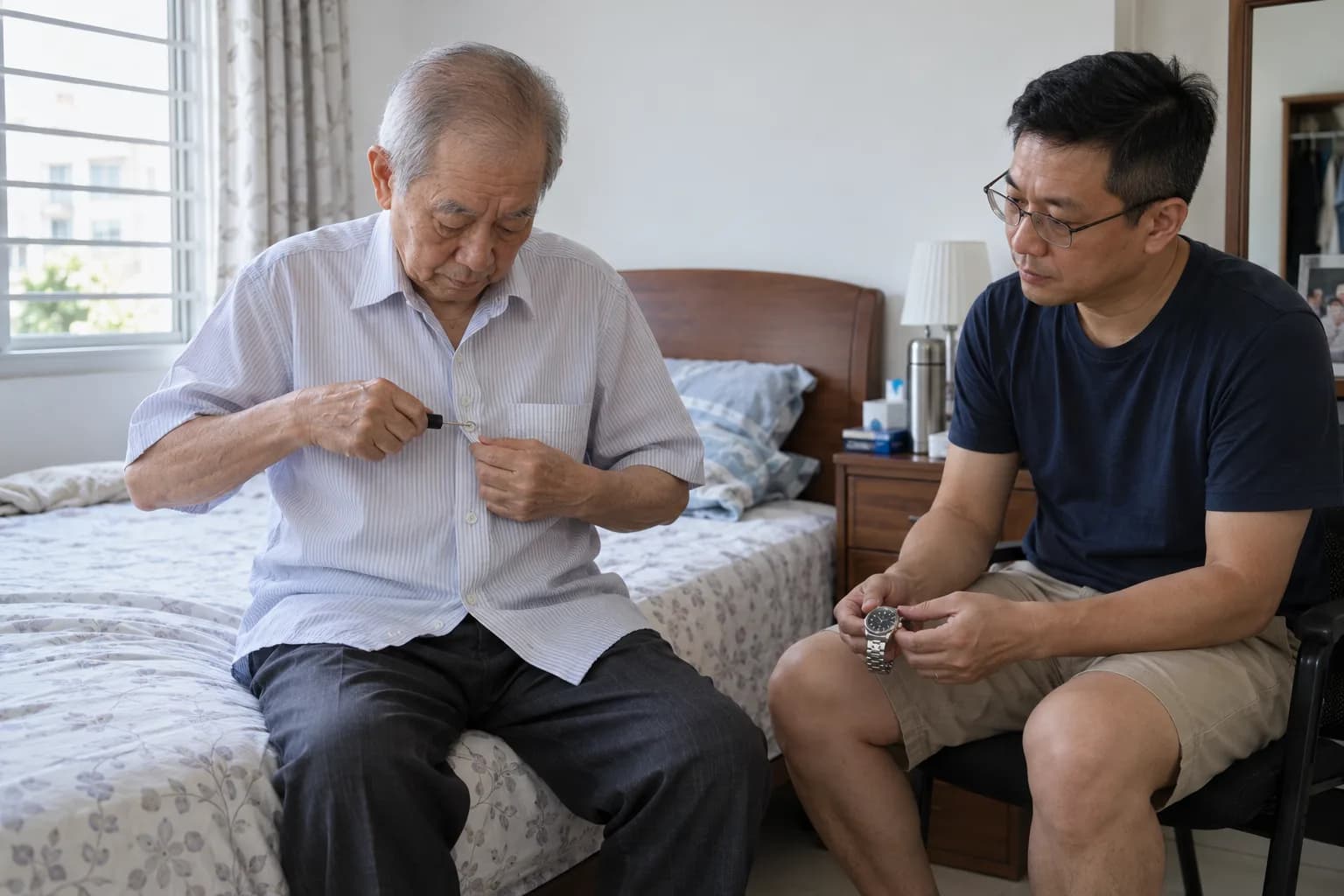
Parkinson's slows movement and affects balance, and it brings less visible changes too: sleep, swallowing, bowels and mood.
If memory changes are part of the picture, our dementia care guide covers what each stage needs.
Why does medication timing matter in Parkinson's?
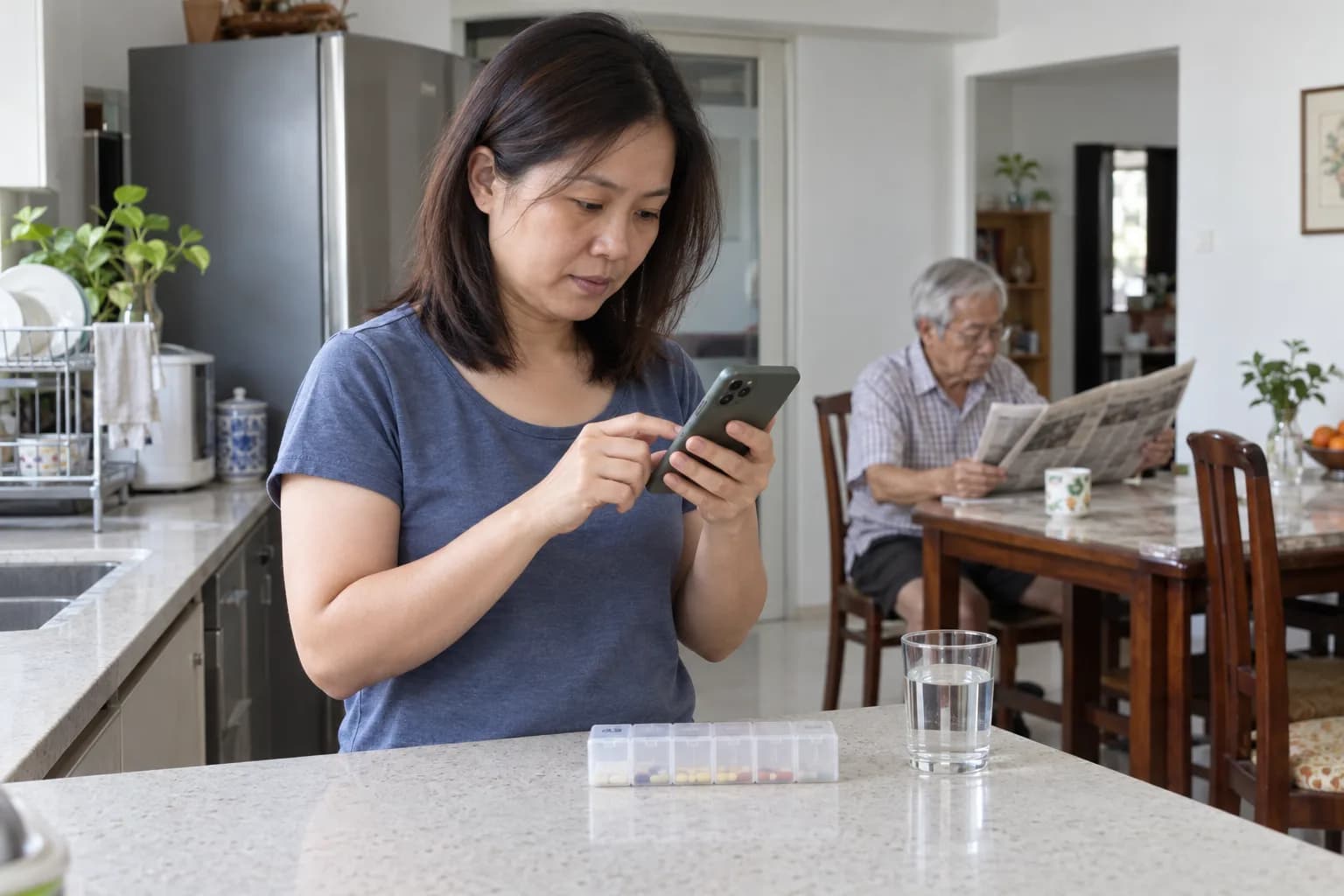
Parkinson's medication works best on time, every time: a late or missed dose can bring back stiffness, tremor and trouble moving.
- 1Write down the times
List every medicine with its exact times, and take the list to every appointment.
- 2Set a reminder
An alarm or a phone app for each dose, so none is late.
- 3Watch for wearing off
Freezing and stiffness often come when the next dose is due.
- 4Tell the hospital
On any hospital stay, ask the ward to give doses at your parent's own times.
Source: Parkinson's UK, Get It On Time and Falls and dizziness; Parkinson's Foundation, Freezing
How can you lower the risk of falls with Parkinson's?
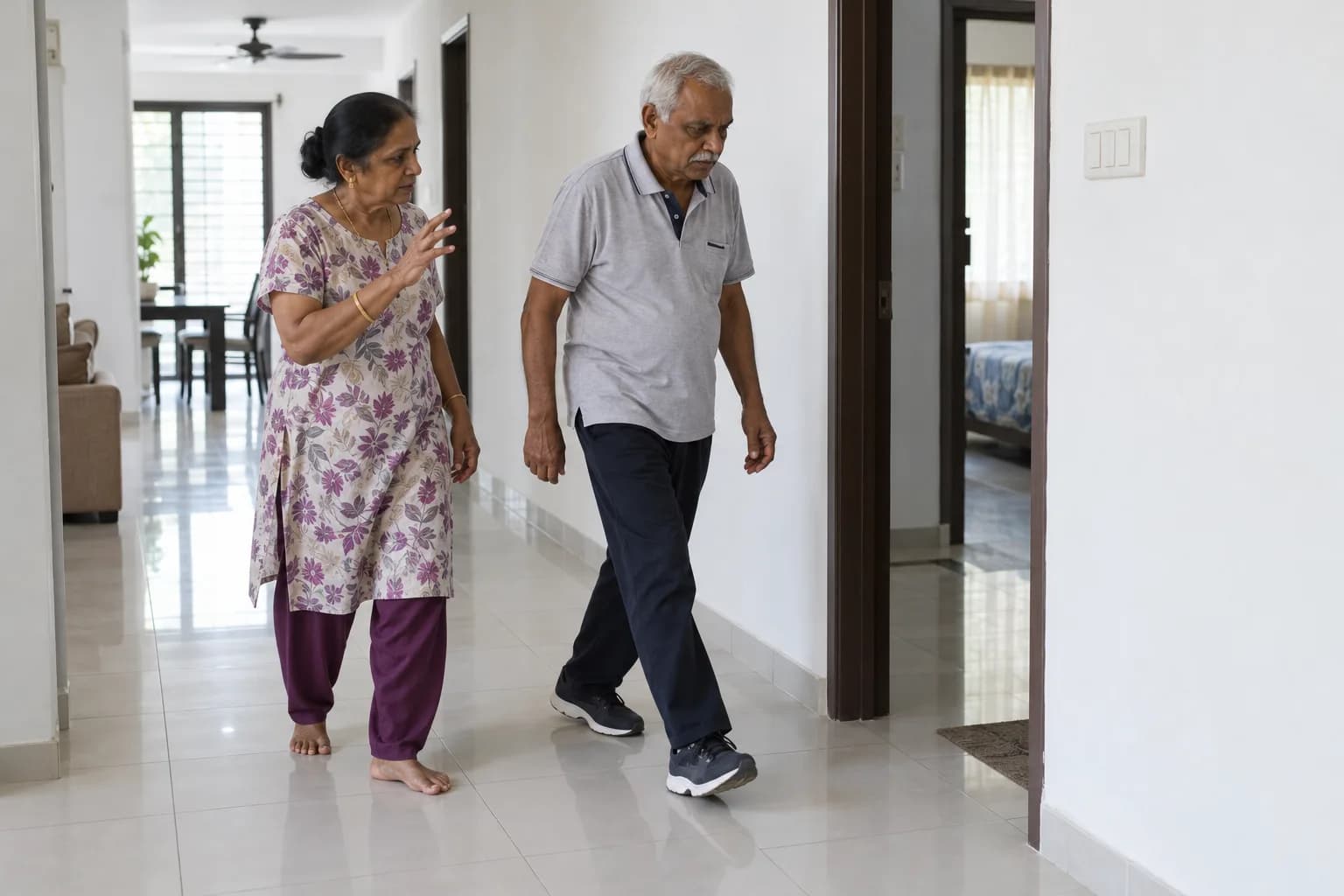
To lower the risk of falls with Parkinson's, plan for turning and freezing, light the way at night, and keep doses on time.
Which therapies help with Parkinson's, and where in Kuching?
Physiotherapy, occupational therapy, and speech and language therapy all help with Parkinson's, alongside the neurologist who manages the medication.
In Kuching
Phone ahead to check what each offers now. For therapy centres, the providers in our stroke recovery guide also offer physiotherapy.
When does caring for Parkinson's at home stop working?
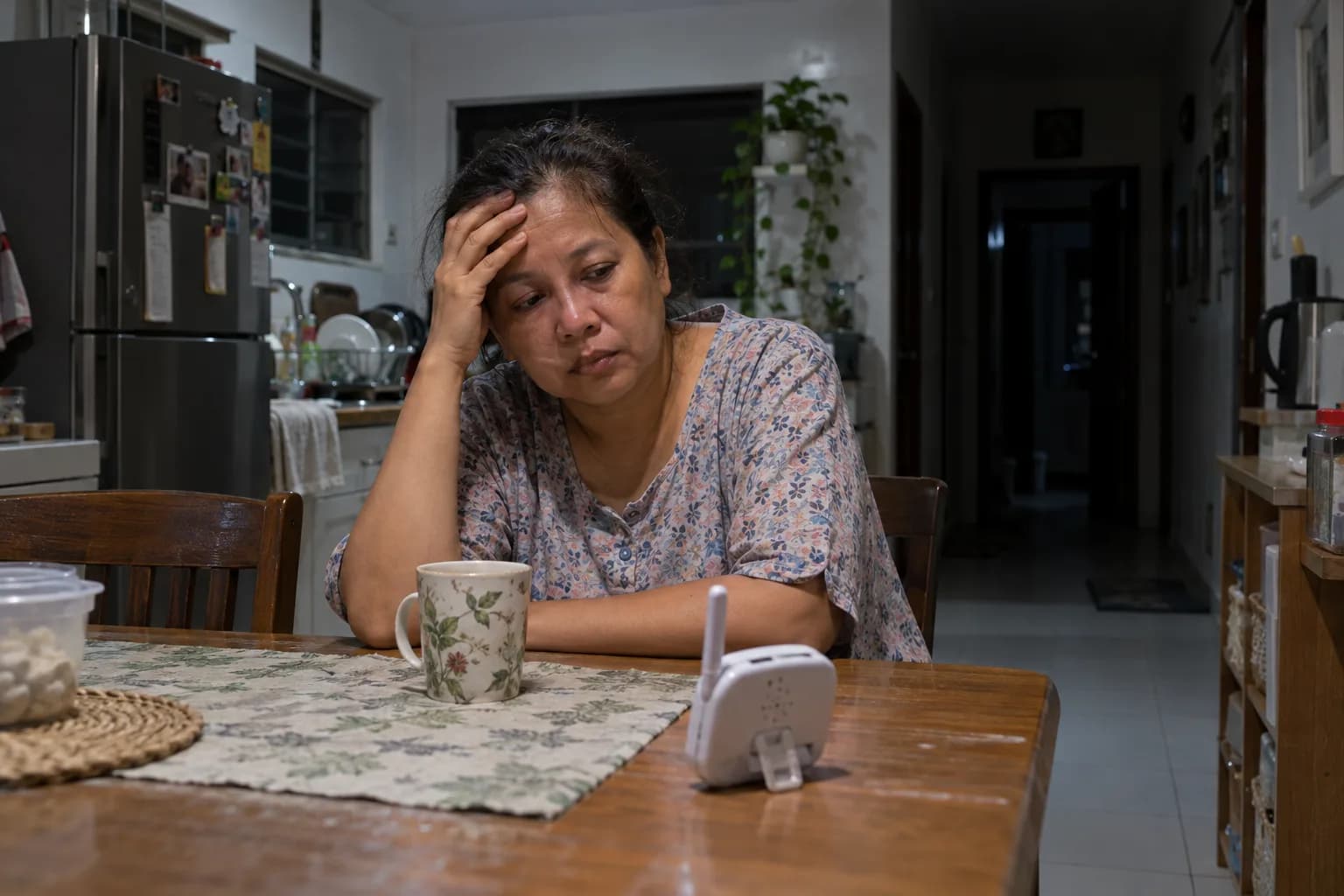
Caring for Parkinson's at home stops working when your parent is not safe between visits, or doses and nights need more hands than the family has.
Signs home is getting hard
Safety
Doses and nights
The main carer
0 of 8 noticed
No single tick decides. Several, across safety and the carer, are worth raising with your parent's doctor and the family. Ticks are saved on this device only.
If several are ticked, book a tourto talk through your parent's needs at Care Collective, or read how our short stays give the main carer a break.
| Home with family | Home plus day care | Short stay | Residential care | |
|---|---|---|---|---|
| Days | At home | At a day centre, usually on weekdays | In the residence | In the residence |
| Nights | At home | At home | In the residence | In the residence |
| Doses | Family | Family, and the centre if it can | The care team | The care team |
| Fits when | Your parent is safe at home and the carer copes | Days need cover, but nights at home are safe | The carer needs a break, or after a hospital stay | Your parent needs help day and night for good |
For how day care works, see our day care guide. For what to check when you visit a care home, see how to choose a care home.
From here on: what Care Collective, Wisma Elica, Kuching, can offer.
What can Care Collective offer a family living with Parkinson's?
Care Collective offers short stays and Assisted Living, with nurses leading the care by day and medication given on schedule. Bring your parent's dose timetable to the tour, and ask how the nurses would follow it.
On a short or recovery stay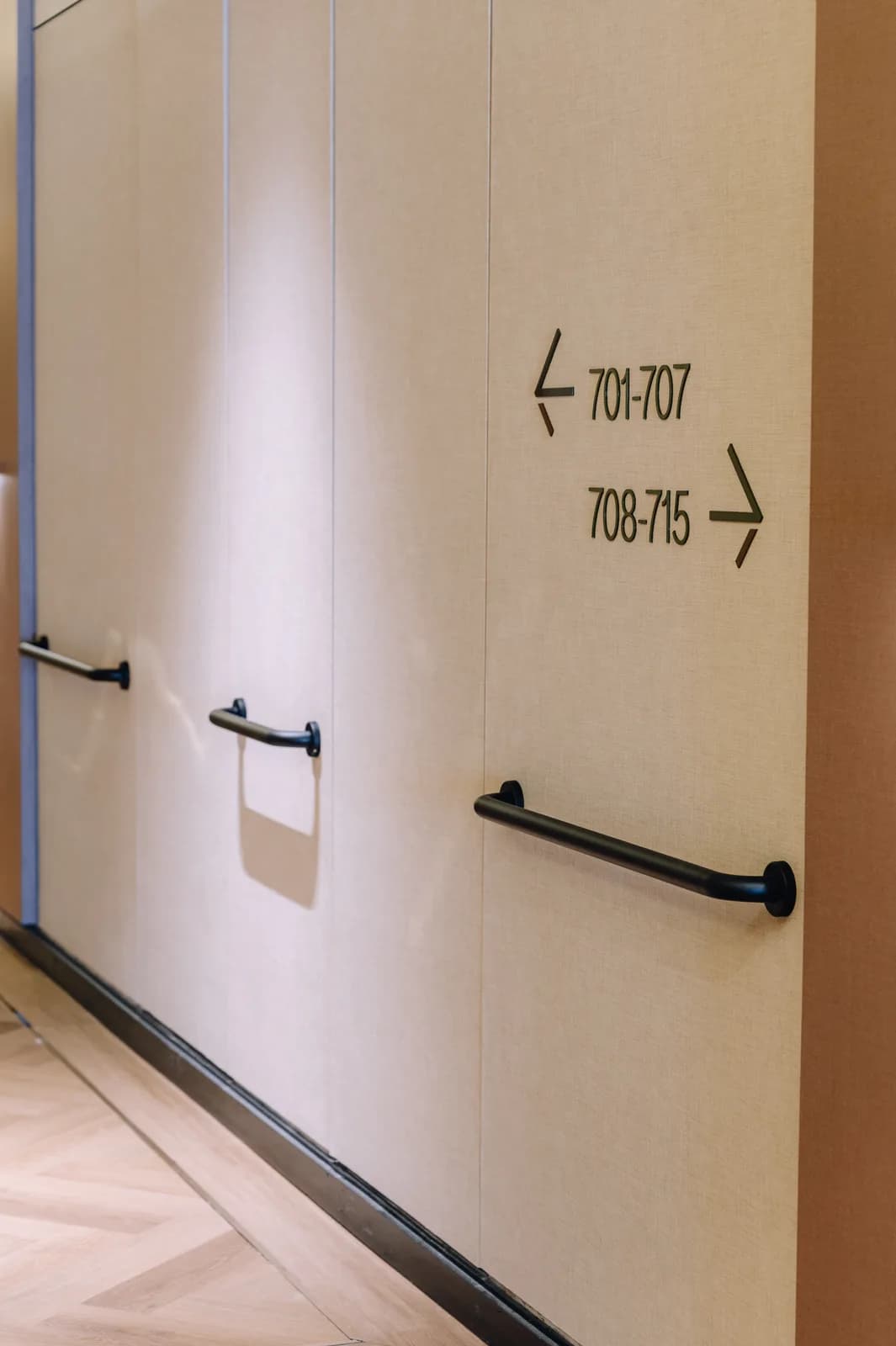

Common questions
Why does timing matter so much for Parkinson's medication?
A late or missed dose can bring on stiffness, tremor and trouble moving. Parkinson's UK says people with Parkinson's need their medication on time, every time.
Why do people with Parkinson's fall?
Balance problems, and freezing, especially when turning or changing direction.
- Freezing often comes when the next dose is due, the Parkinson's Foundation says.
- A physiotherapist can teach ways to get moving again.
Which therapies help with Parkinson's?
Physiotherapy, occupational therapy, and speech and language therapy. Physio helps with stiffness, freezing and falls; occupational therapy with changes at home; speech and language therapy with swallowing and speech.
Is there a Parkinson's support group in Kuching?
We found none in published sources. The Malaysian Parkinson's Disease Association, in Kuala Lumpur, has run a support group since 1994. It offers booklets in English, Malay and Chinese.
When should a parent with Parkinson's move into care?
When home is no longer safe, or doses and nights need more help than the family can give. Talk it through with your parent's neurologist and, where you can, with your parent.
Come and talk it through
If home is getting hard, come and see Care Collective: tours run daily from 10am to 4pm. You can see a suite and talk through your parent's Parkinson's with a Care Advisor.
Our offer: RM2,000 off the first month of a new Assisted Living stay of a month or longer, dementia care included, until 31 December 2026. A short stay qualifies only when it lasts a month or longer.
If you would rather ask first, message us on WhatsApp. You can also read about Assisted Living, short stays and the Clubhouse.
Book a tourSources
The sources behind this page, with the date we checked them
Checked on 24 October 2026.
- NHS, Parkinson's disease: symptoms, reviewed 3 November 2022 (main symptoms, balance, swallowing, constipation, sleep, dementia)
- NHS, Parkinson's disease: treatment, reviewed 3 November 2022 (physiotherapy, speech and language therapy)
- Parkinson's UK, Get It On Time (on time every time, late doses in hospital)
- Parkinson's UK, Falls and dizziness, updated 8 August 2025 (balance, grab rails, lighting, dose reminders)
- Parkinson's Foundation, Freezing (falls when turning, freezing when a dose is due, physical and occupational therapists)
- Parkinson's UK, Physiotherapy, updated 16 February 2024 (freezing and falls)
- Parkinson's UK, Occupational therapy, updated 1 July 2025 (changes at home)
- Parkinson's UK, Speech and language therapy, updated 31 August 2021 (swallowing and communication)
- Parkinson's UK, Eating and swallowing, updated 30 June 2026 (signs of swallowing problems)
- Parkinson's UK, Bladder and bowel changes, updated 9 March 2020 (constipation)
- Parkinson's UK, Sleep problems, updated 6 August 2025 (night lights, the route to the bathroom)
- Parkinson's UK, Hallucinations and delusions (seeing things that are not there)
- Clinical Research Malaysia, Hospital Umum Sarawak (neurology among clinical services)
- Borneo Post, 11 March 2025 (deep brain stimulation at KPJ Kuching Specialist Hospital)
- Normah Medical Specialist Centre (a neurologist in Kuching)
- Malaysian Parkinson's Disease Association (support group since 1994, booklets in English, Malay and Chinese)
- Borneo Post, 5 July 2015 (the Sibu Parkinson's Society)
- Care Collective care team, 23 October 2026 (short stays, day and night care, physio, the hospital visit, hospital trips) and Book a Tour (tour hours, the year-end offer)