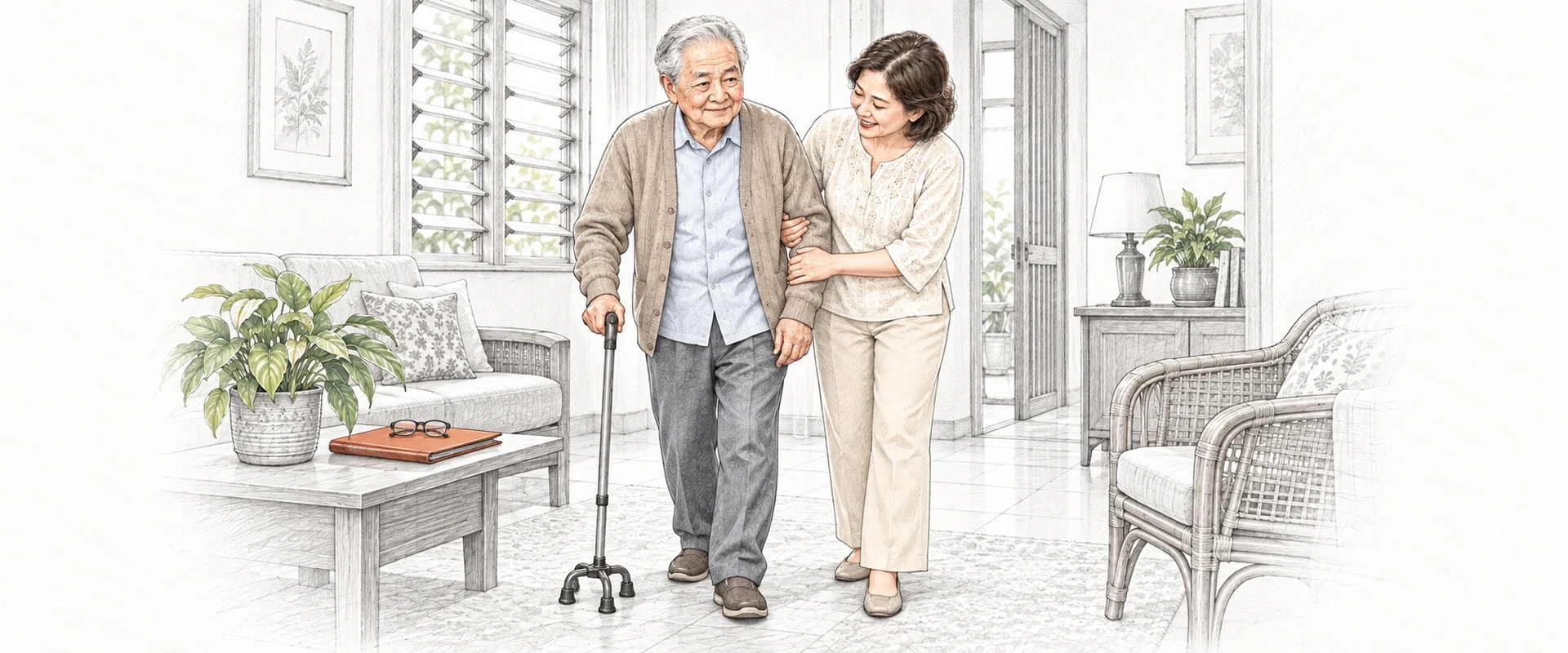
What happens in the first weeks after a stroke?
Stroke rehabilitation usually starts in hospital once your parent is stable, and the sooner it starts, the better the chance of regaining skills.
- 1In hospitalRehabilitation starts
Once your parent is stable, often within 48 hours, the team assesses movement, speech and swallowing.
- 2Before dischargePlan where recovery happens
Get the discharge summary, the medication list, the therapy plan and training for the carer.
- 3First weeksKeep therapy going
The sooner therapy starts, the better the chance of regaining skills.
- 4Months afterReview progress
Recovery can take months or years. Expect a review at about six months.
Source: NINDS, Post-Stroke Rehabilitation (2020); Malaysia's ischaemic stroke guideline (2020); NHS, Stroke recovery
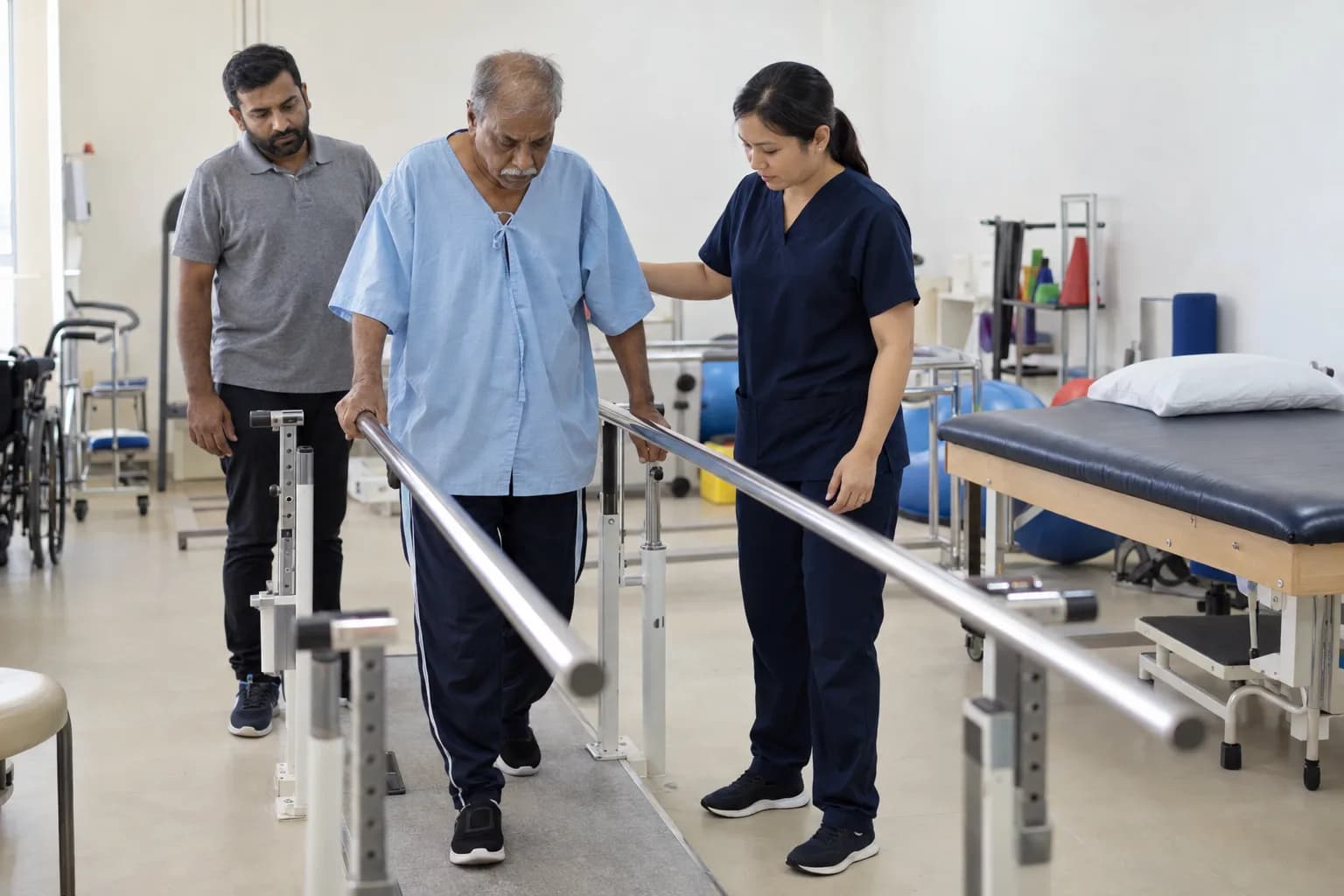
Malaysia's stroke guideline names the team: doctors, nurses, physiotherapists, occupational therapists, speech therapists, social workers and dietitians, who should assess your parent within 48 hours. It also says the family should take part in decisions about discharge, and that the carer should be trained before your parent goes home.
What does a parent need after a stroke?
After a stroke, most parents need help with some of movement, speech, swallowing, personal care and mood, and the mix differs for each person.
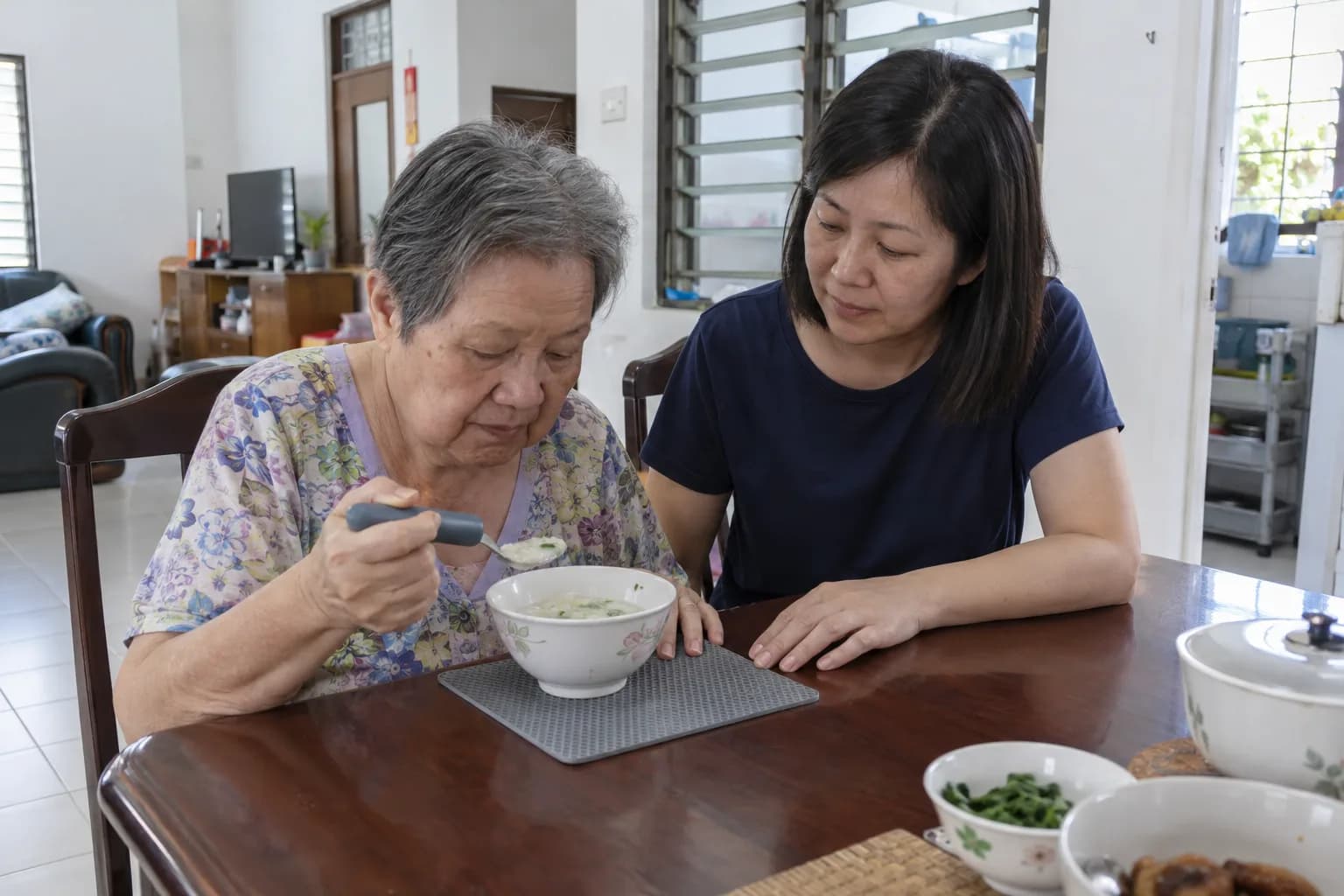
Falls are a real risk. Malaysia's stroke guideline puts them at 7% in the first week and up to 73% in the year after a stroke, and says everyone recovering should be assessed for the risk of falls.
Where should stroke recovery happen: home, day care or a recovery stay?
The hospital's discharge team assesses what your parent needs at night, with personal care and through the day. Where recovery happens depends on that assessment.
Questions to take to the discharge team
Answer yes or no. Each yes adds a question to ask the hospital's discharge team, with the options to talk through.
AskWhat help will my parent need at night, and for how long?
Options to talk throughA trained carer at home overnight, a recovery stay, or residential care.
AskCan you show our family carer how to help safely before discharge?
Options to talk throughHelp at home from family or a trained carer, or a recovery stay.
AskIs it safe for my parent to be alone, and for how long?
Options to talk throughDay care on weekdays, a carer at home, or a recovery stay.
AskCan my parent have therapy at home soon after discharge, or should we book outpatient sessions?
Options to talk throughTherapy at home, outpatient therapy, or therapy during a recovery stay.
Answer a question to begin.
A way to start the conversation, not an assessment. The discharge team assesses what your parent can do.
If the team suggests a recovery stay, book a tour to see one at Care Collective, or read how our short and recovery stays work first.
| Home with family | Home plus day care | Recovery stay | Residential care | |
|---|---|---|---|---|
| Days | At home | At a day centre, usually on weekdays | In the residence | In the residence |
| Nights | At home | At home | In the residence | In the residence |
| Care from | Family, sometimes a hired helper | Centre staff by day, family at night | A care team, day and night | A care team, day and night |
| How long | Open-ended | Open-ended | Some weeks, until home is ready | Long term |
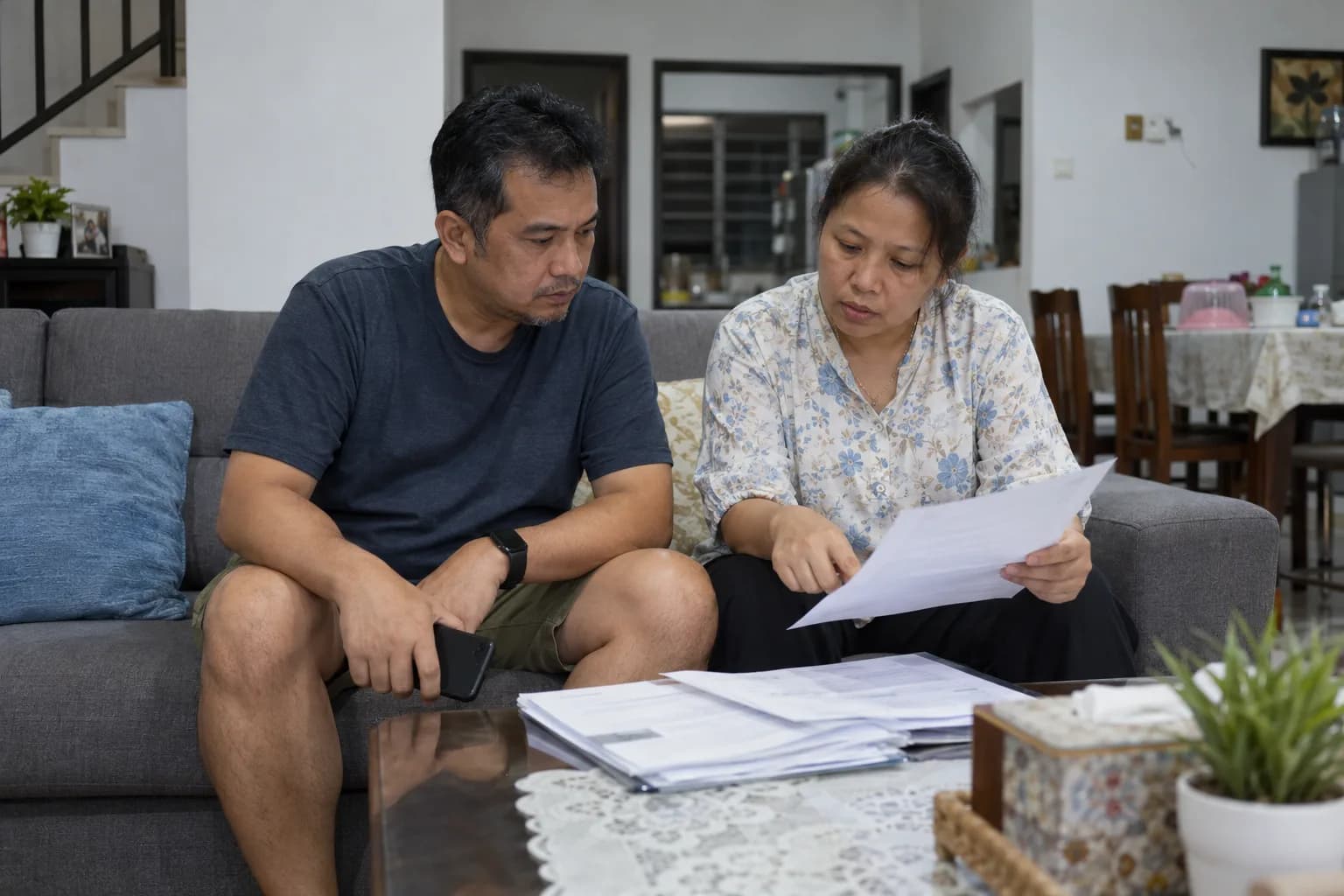
For how day care works, see our day care guide. For what a month of residential care costs at market rates, see the Kuching care guide.
Where can you find stroke rehabilitation in Kuching?
In Kuching, stroke rehabilitation starts in the hospital that treats your parent, and private centres offer therapy after discharge. Ask the ward where your parent is referred.
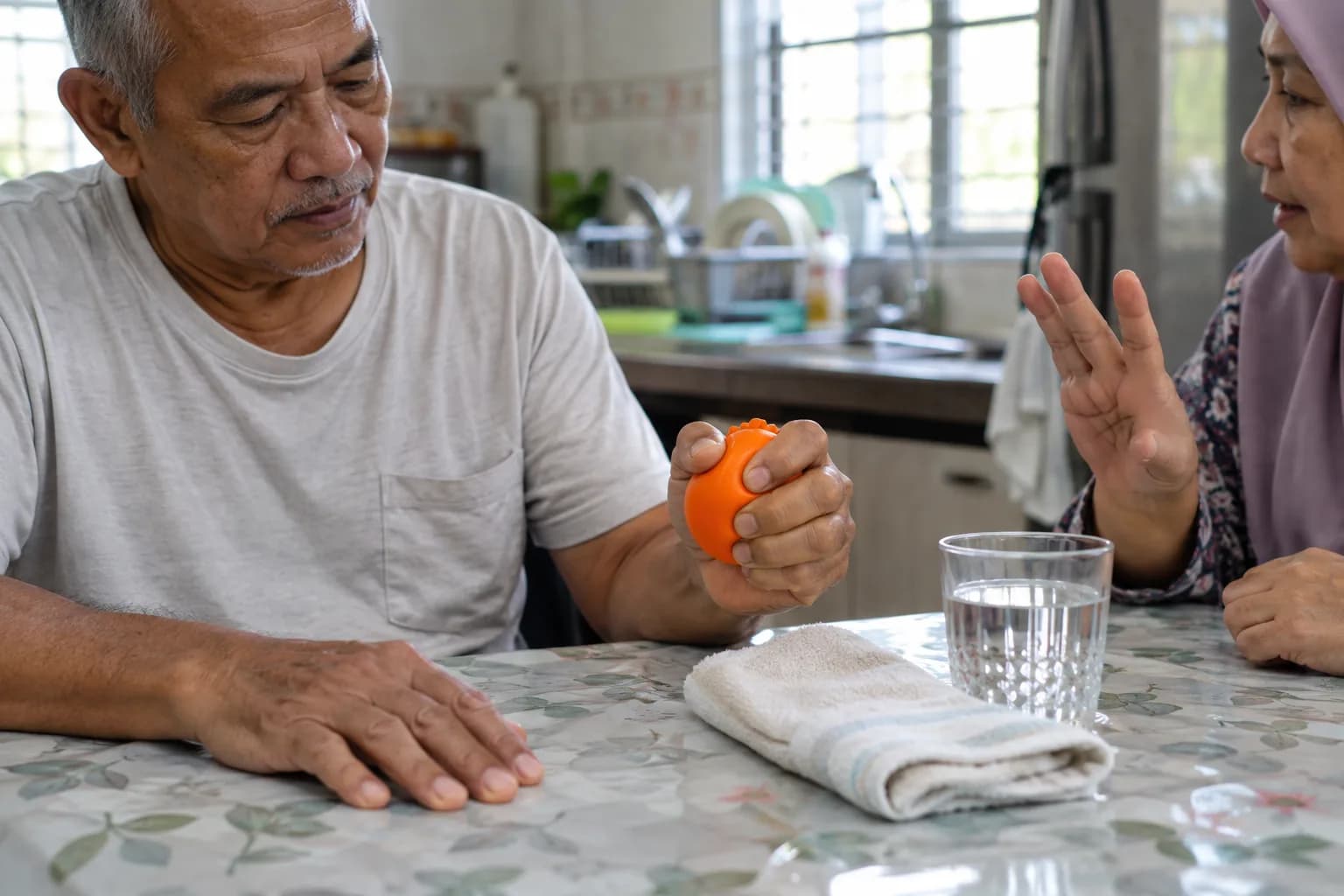
These come from the providers' own sites and news reports, not our own checks. Phone ahead to ask what each offers now, and how many sessions a week your parent can have.
How do you get the home ready after a stroke?
Get the home ready before your parent comes back: clear the walking routes, add grab rails, and set up the bathroom so your parent can sit to wash.
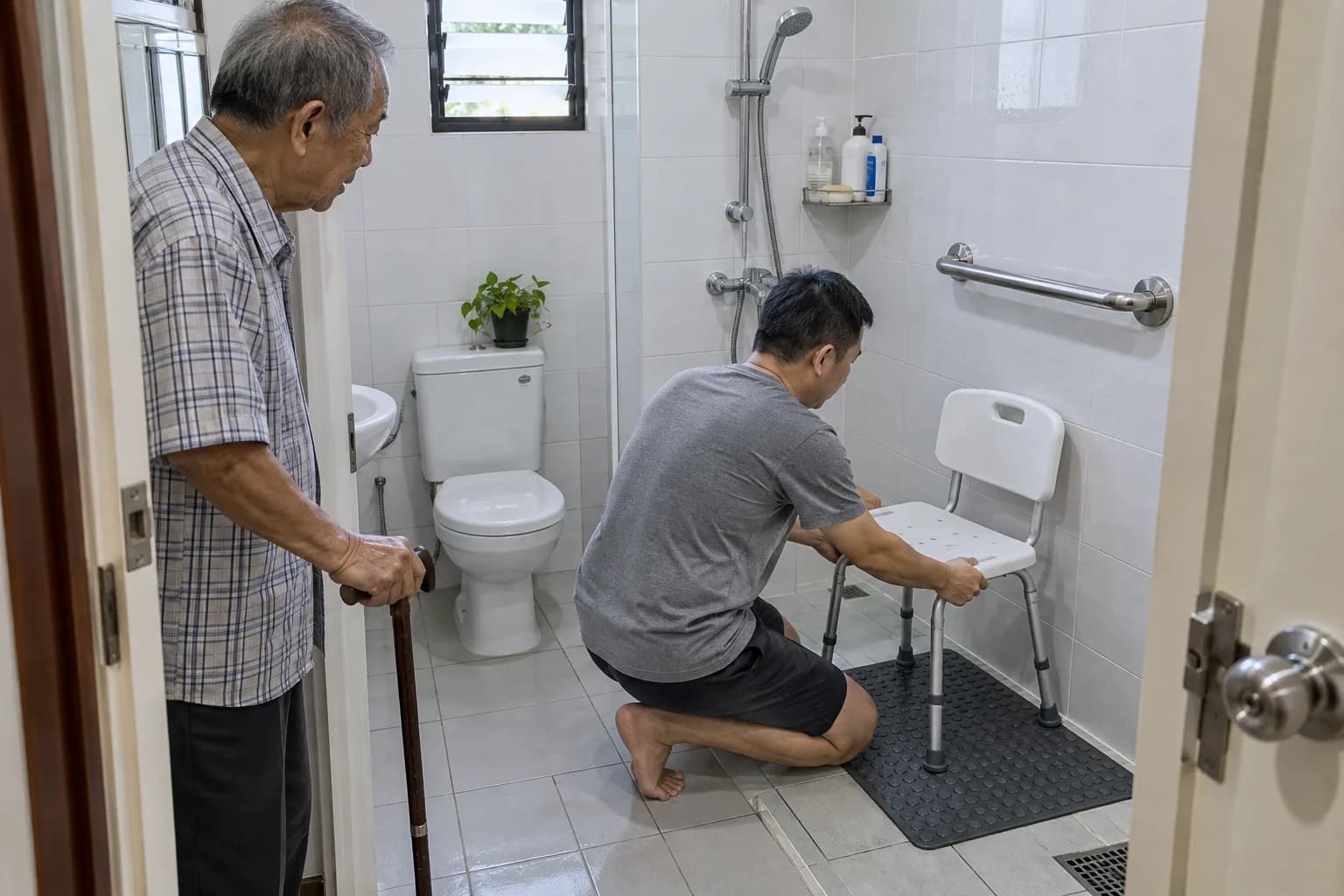
Malaysia's stroke guideline recommends that an occupational therapist check the home, on a visit or from photos and videos the family takes. Ask the ward whether one can do this before discharge.
What should you ask before your parent leaves hospital?
Before a stroke discharge, ask the ward for the papers, the therapy plan and training for whoever will care for your parent.
From the wardFrom a recovery stay or care home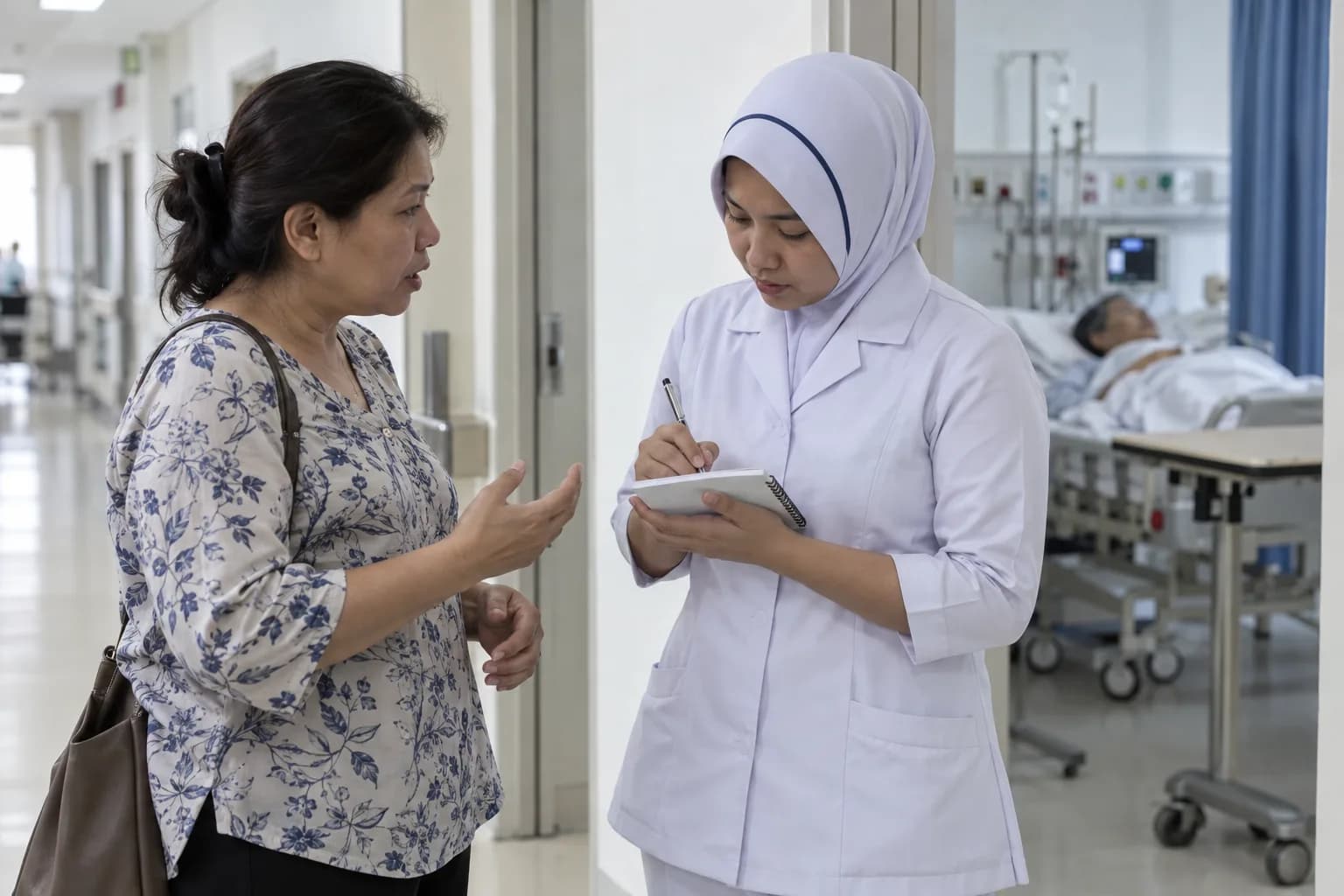
For a fuller list to take on a visit, see how to choose a care home.
From here on: recovery after a stroke at Care Collective, Wisma Elica, Kuching.
How does Care Collective help after a stroke?
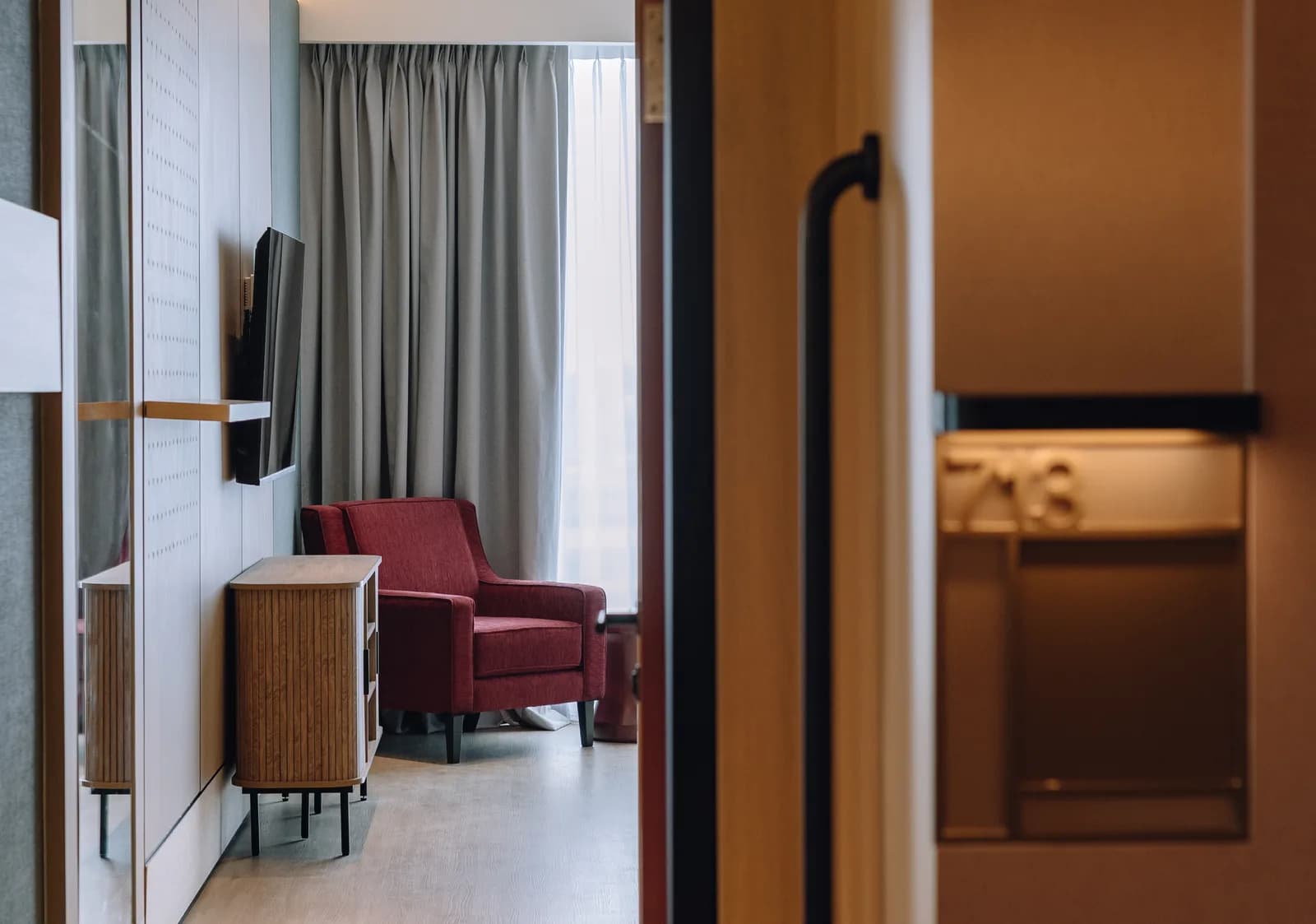
Care Collective offers recovery stays after hospital, with help with daily care, a nurse's check every day and medication on schedule. Physio is available, charged separately.
On a short or recovery stay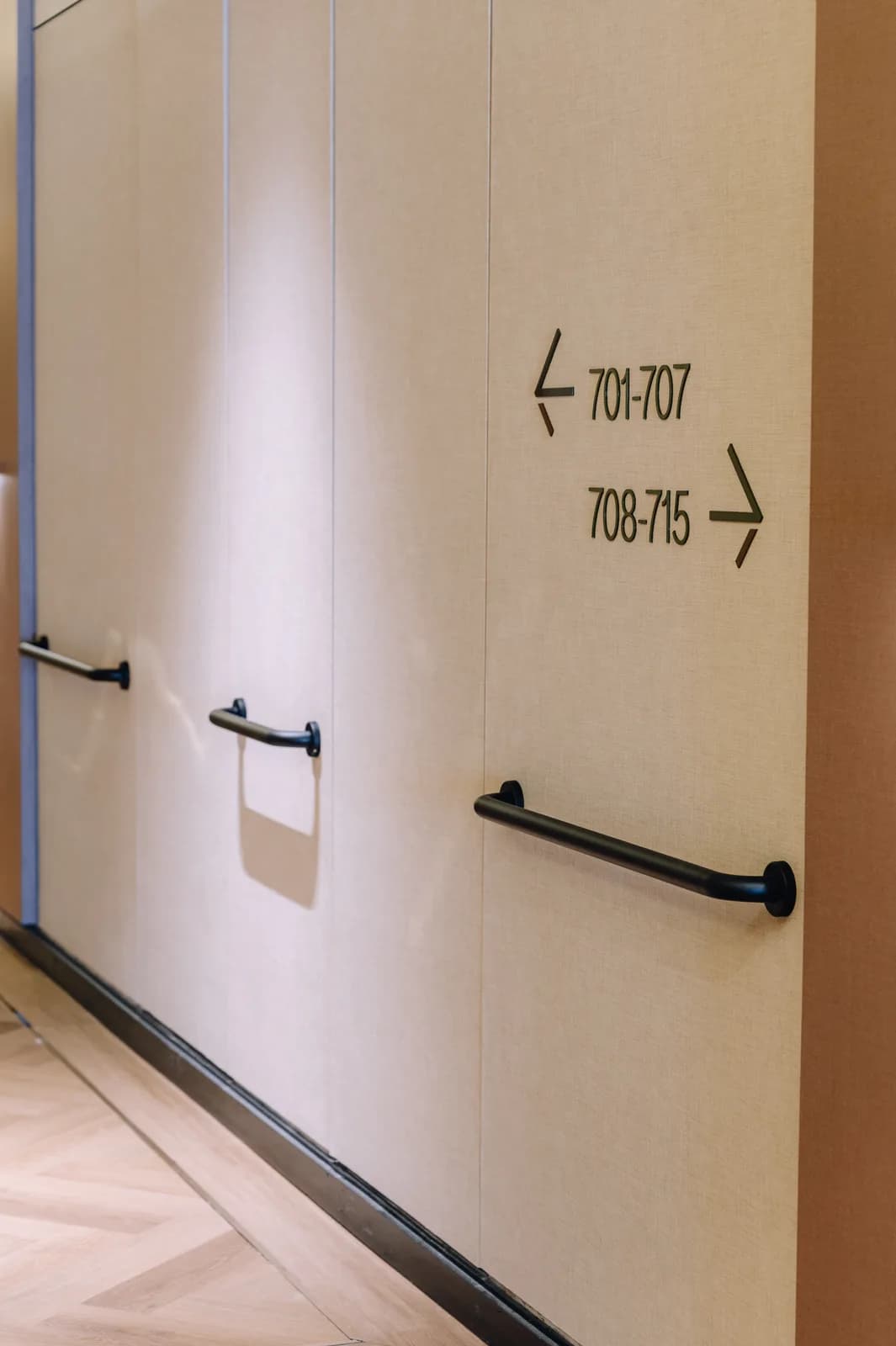
Common questions
How long does stroke recovery take?
It varies: days or weeks for some people, months or years for others.
- The NHS says to expect a review of progress at about six months.
- The brain can keep rewiring itself and improving function over months to years, NINDS notes.
Can a parent recover from a stroke at home?
Yes, when someone can help with what your parent cannot yet do, day and night.
- Malaysia's stroke guideline recommends early supported discharge for people with mild to moderate disability, with therapy at home starting within 24 hours.
- Ask the ward whether your parent can have it.
What is a recovery stay?
A stay of some weeks in a care residence after hospital, with help from a care team until your parent can go home. It covers the weeks when your parent needs more help than the family can give at home.
What should a care home offer a parent after a stroke?
Help at night, a nurse on duty or on call, and therapy, or a way to get to it. Take the questions in this guide to every place you visit, so the answers compare.
What are the signs of a stroke?
A drooping face, weakness in one arm, or slurred speech. Call 999 straight away. A second stroke is more likely after a first one, so the whole family should know the signs.
Come and talk it through
If your parent will need more help than home can give after a stroke, come and see Care Collective: tours run daily from 10am to 4pm. You can see a suite and talk through your parent's recovery with a Care Advisor.
Our offer: RM2,000 off the first month of a new Assisted Living stay of a month or longer, dementia care included, until 31 December 2026. A recovery stay qualifies only when it lasts a month or longer.
If you would rather ask first, message us on WhatsApp. You can also read about short stays and Assisted Living.
Book a tourSources
The sources behind this page, with the date we checked them
Checked on 24 October 2026.
- National Institute of Neurological Disorders and Stroke (NINDS), Post-Stroke Rehabilitation, April 2020 (therapy often within 48 hours, the sooner the better, improvement over months to years)
- Malaysian Society of Neurosciences, Academy of Medicine of Malaysia and Ministry of Health Malaysia, Clinical Practice Guidelines: Management of Ischaemic Stroke, third edition, 2020 (the stroke team, falls, discharge planning, carer training, early supported discharge, the home check)
- NHS, Stroke: recovery, reviewed 12 September 2024 (how long recovery takes, the six-month review, effects of a stroke)
- NHS, Stroke: symptoms, reviewed 12 September 2024 (the warning signs)
- NHS, Stroke: causes, reviewed 12 September 2024 (a second stroke is more likely)
- NHS, Falls, reviewed 6 March 2025 (how to prevent falls: clutter, rails, mats, footwear)
- Ministry of Health Malaysia, Nursing Division, Reference Guide for Nurses in the Prevention of Patient Fall, second edition, 2018 (dim lighting, grab bars)
- Borneo Post, 1 October 2013 (the rehabilitation physician unit at Sarawak General Hospital, physiotherapy units)
- Rehab Concept (a Kuching centre; physiotherapy, occupational and speech therapy)
- National Stroke Association of Malaysia (NASAM) (its centres and helpline)
- Care Collective care team, 23 October 2026 (recovery stays, day and night care, physio, the hospital visit, hospital trips) and Book a Tour (tour hours, the year-end offer)