How do you stop pressure sores on a bedridden parent?
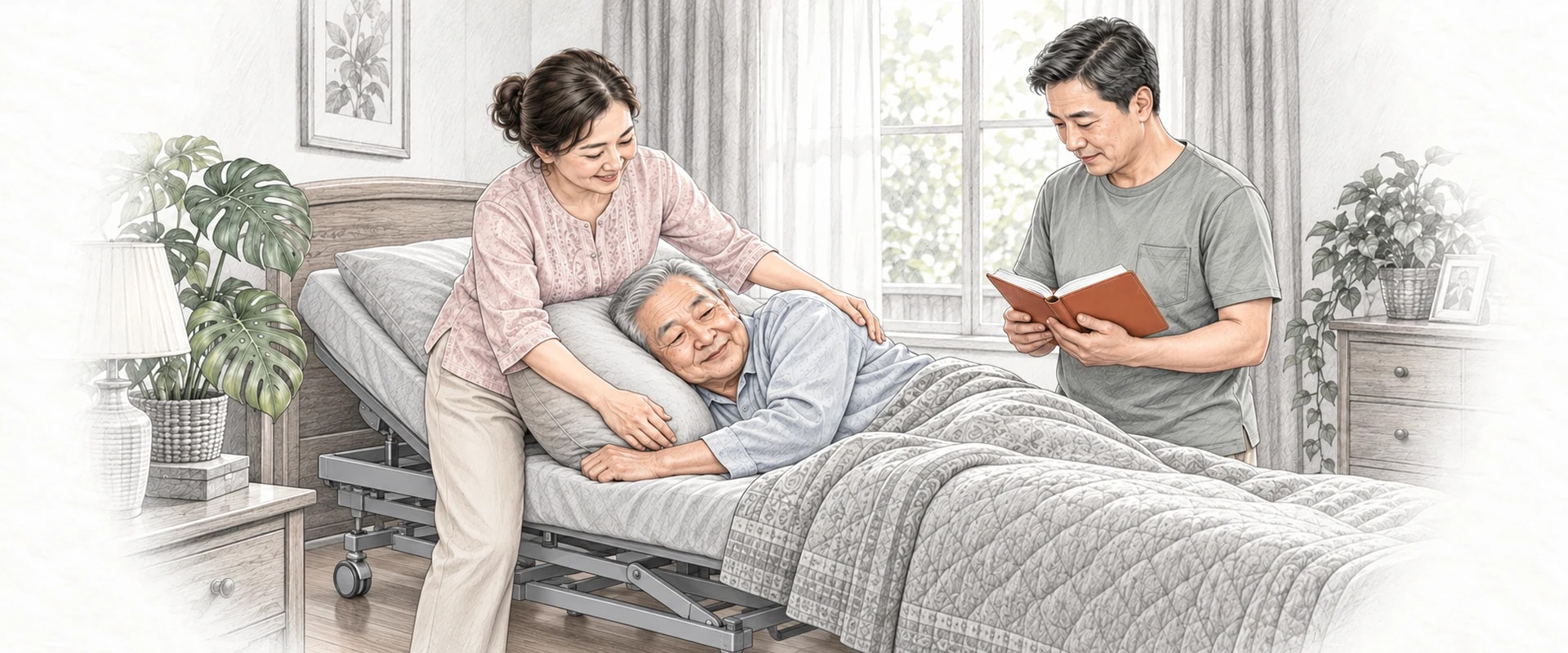
You stop pressure sores on a bedridden parent by changing their position often and checking their skin every day. Sores form where bone presses on the skin, and the NHS says they can appear within hours.
- Heels
- Elbows
- Hips
- Tailbone
- A patch that stays red when you press it, or purple or blue on brown or black skin.
- Skin that feels warm, spongy or hard.
- Pain or itching in that spot.
Source: NHS, Pressure ulcers (bedsores), reviewed 6 July 2023
NICE, the UK's health guideline body, says adults at high risk of sores should be moved at least every 4 hours, and adults at risk at least every 6 hours. Some NHS hospital leaflets ask for every 2 hours. Ask the ward nurse or your parent's doctor which schedule your parent needs, then see what it means for your day.
A day of turning
12 turns a day, 4 of them between 10pm and 6am.
- 6am
- 8am
- 10am
- noon
- 2pm
- 4pm
- 6pm
- 8pm
- 10pmNight
- midnightNight
- 2amNight
- 4amNight
Follow the times and positions your parent's nurse or doctor sets, and ask them to show you how to turn your parent safely.
Every 2 hours means 12 turns a day, 4 of them at night. If that is more than your family can cover, book a tour and talk it through with our care team.

How do you help a bedridden parent eat and drink safely?
Help a bedridden parent eat and drink sitting up, and watch for signs that swallowing has become hard.
Tell the doctor if your parent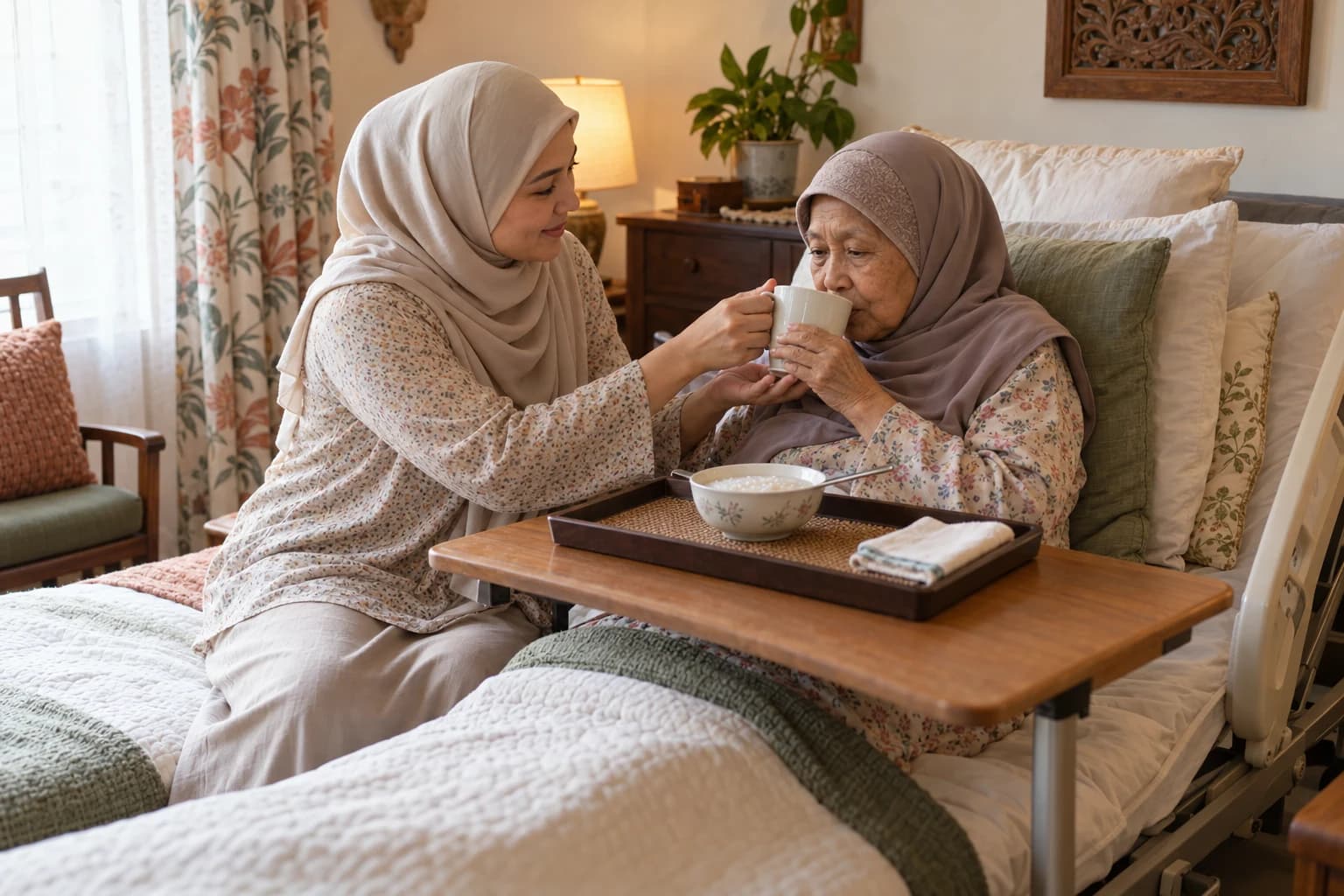
These are signs of swallowing problems, the NHS says. A speech therapist can test your parent's swallowing and suggest softer food or thicker drinks.
How do you keep a bedridden parent clean and comfortable?
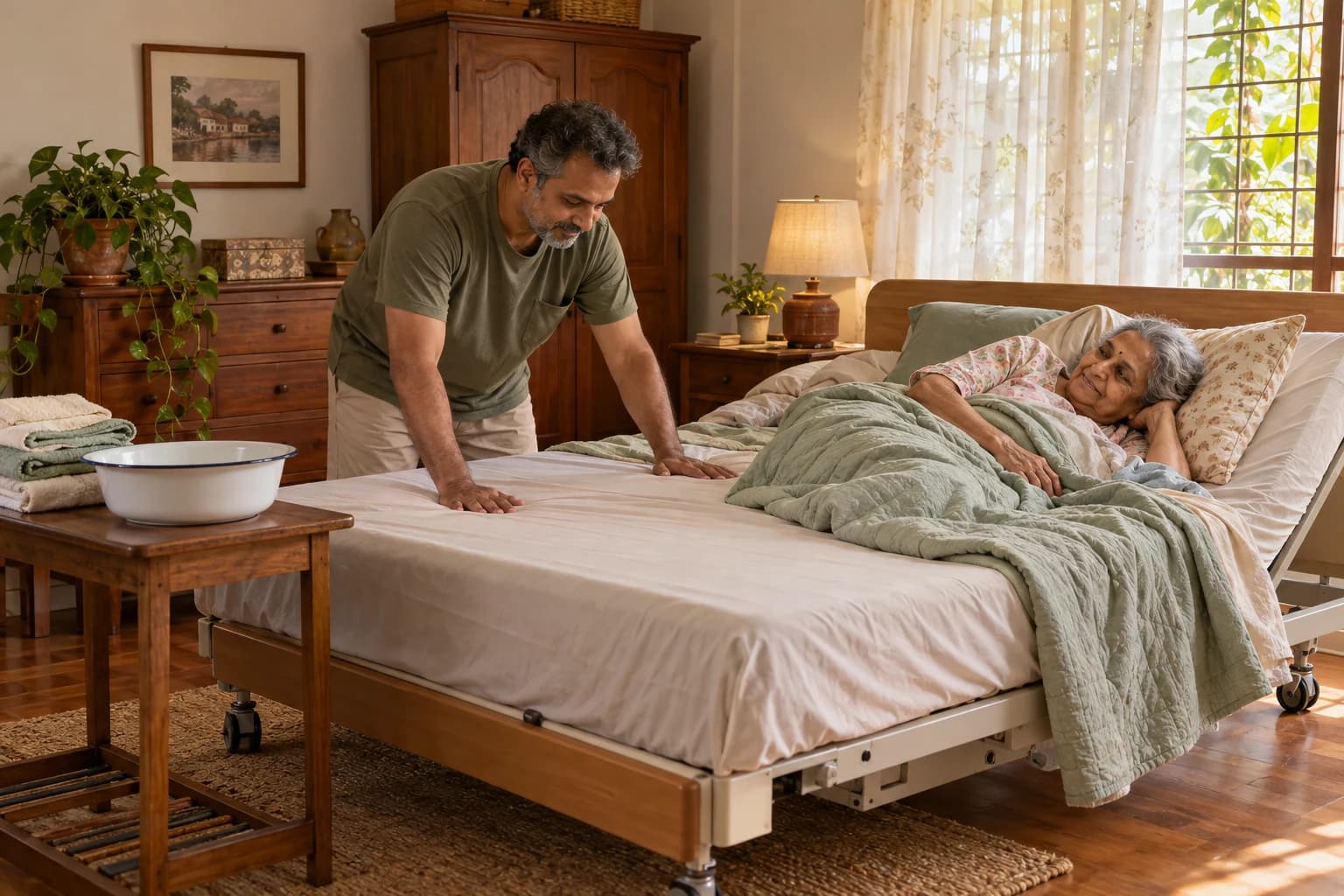
Keep a bedridden parent's skin clean and dry, and look at it every time you wash or change them. Swollen, sweaty or broken skin is more likely to get a sore, the NHS says.
What equipment does a bedridden parent need, and where do you get it in Kuching?
A bedridden parent usually needs an adjustable bed and a pressure-relieving mattress, and the ward can tell you what else.
Where to get it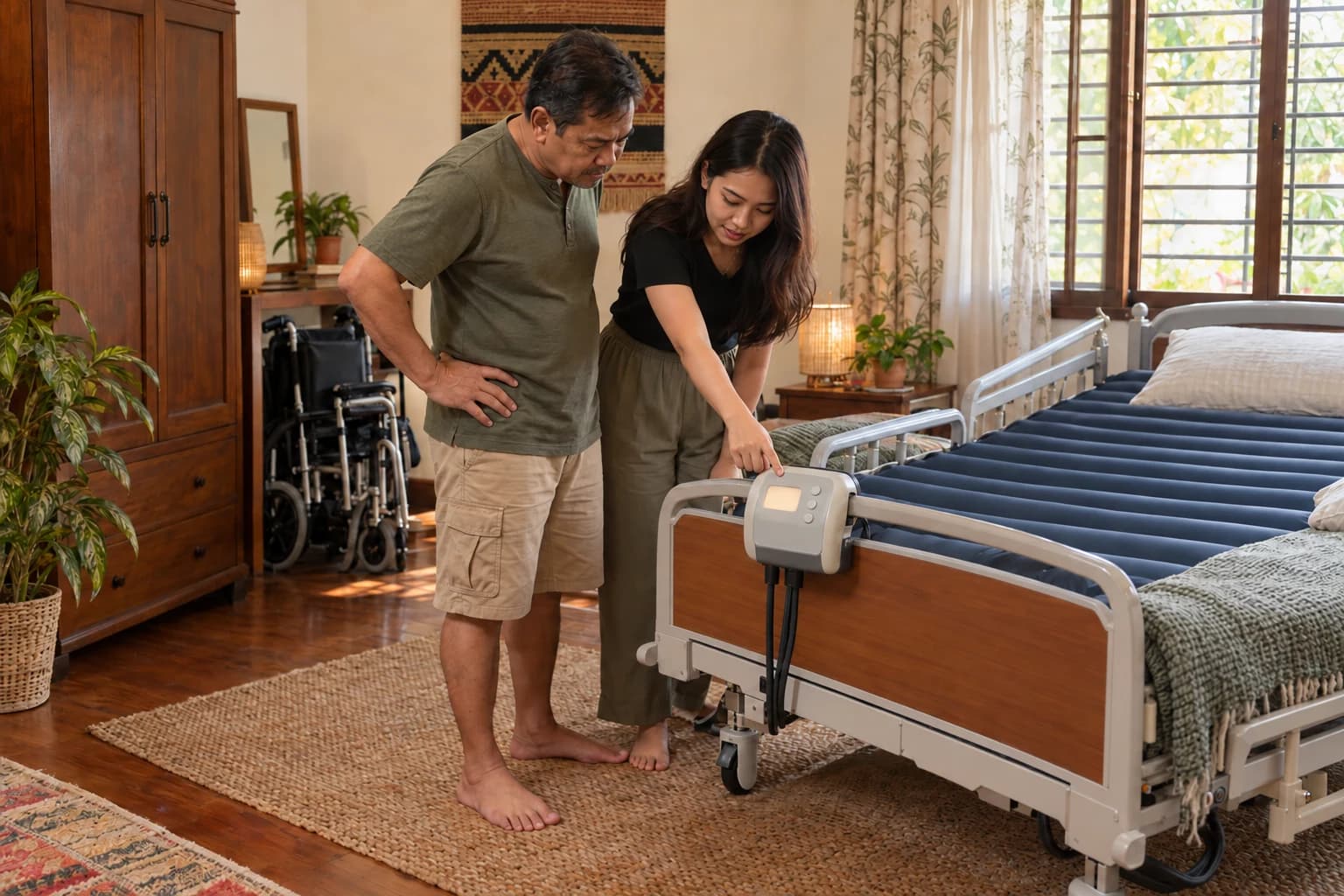
What help can families get in Kuching?
Families in Kuching can ask for Ministry of Health home visits, RM500 a month from JKM for the carer, and tax relief on care costs.
- Ministry of HealthHome visits for a stable bedridden patient after discharge
Ask the hospital or your health clinic to refer your parent.
- Welfare Department (JKM)RM500 a month for the carer
For Malaysian citizens, with a household income of RM5,000 a month or less.
- Welfare Department (JKM)A wheelchair, on a doctor's recommendation
For people with disabilities on a low income.
- LHDNTax relief on what you spend
Up to RM6,000 for basic supporting equipment for a disabled parent, and up to RM8,000 for a parent's medical and carer costs.
Source: MyGOV, Ministry of Health and Welfare Department aid pages, updated 13 March 2026; LHDN tax reliefs, year of assessment 2025
You apply for both JKM aids on its eBantuan portal. The home visits need a referral, so ask the ward before your parent leaves hospital. For help paying for a care home, see who helps pay in our guide to choosing a care home.

When is caring at home no longer enough?
Caring for a bedridden parent at home is no longer enough when their care needs more hands, more nights or more nursing than the family can give.
Signs it may be time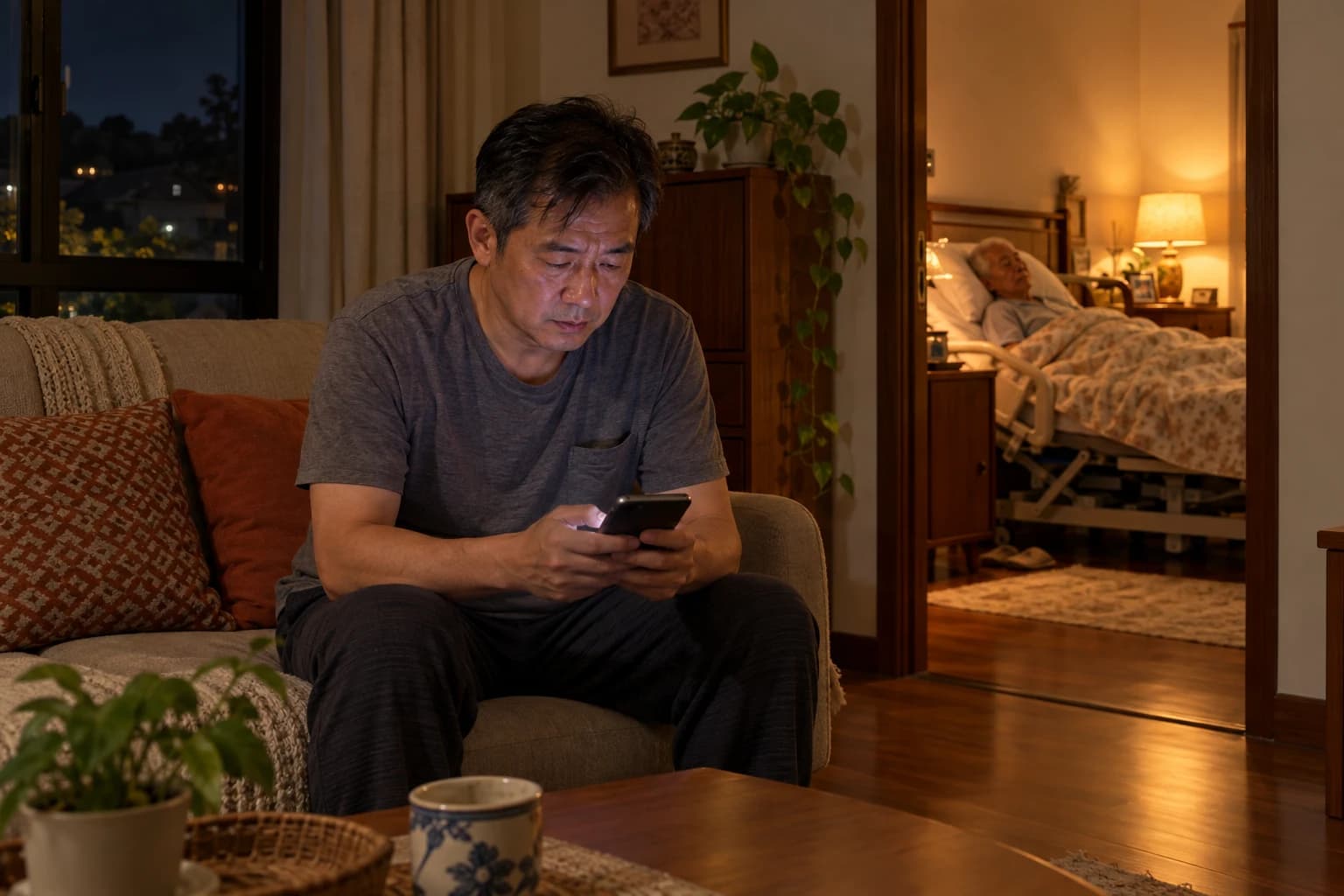
What should you ask a nursing home about bedridden care?
Ask every nursing home whether it takes residents who are bedridden, and how it turns, feeds and checks them, day and night.
Care and safetyMeals, visits and fees
Take our tour checklist on every visit, and use the fee estimator to see what a month costs at market rates in Kuching.
From here on: care at Care Collective, Wisma Elica, Kuching.
What can Care Collective tell you about caring for a bedridden parent?
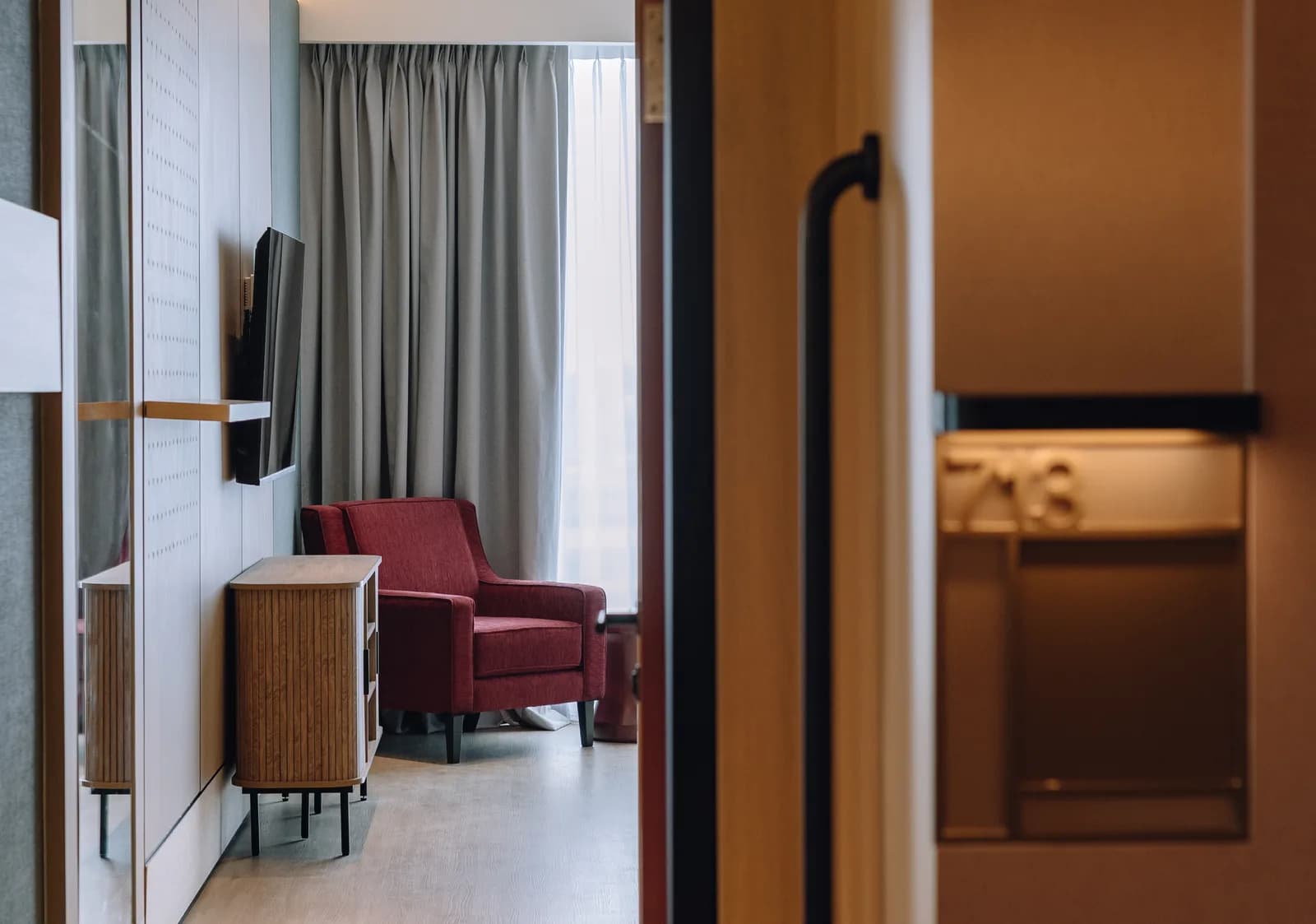
At Care Collective, each resident's care plan is built from the nurses' assessments, so the care team can tell you whether Assisted Living suits your parent. Here is how care runs today.
Care in Assisted Living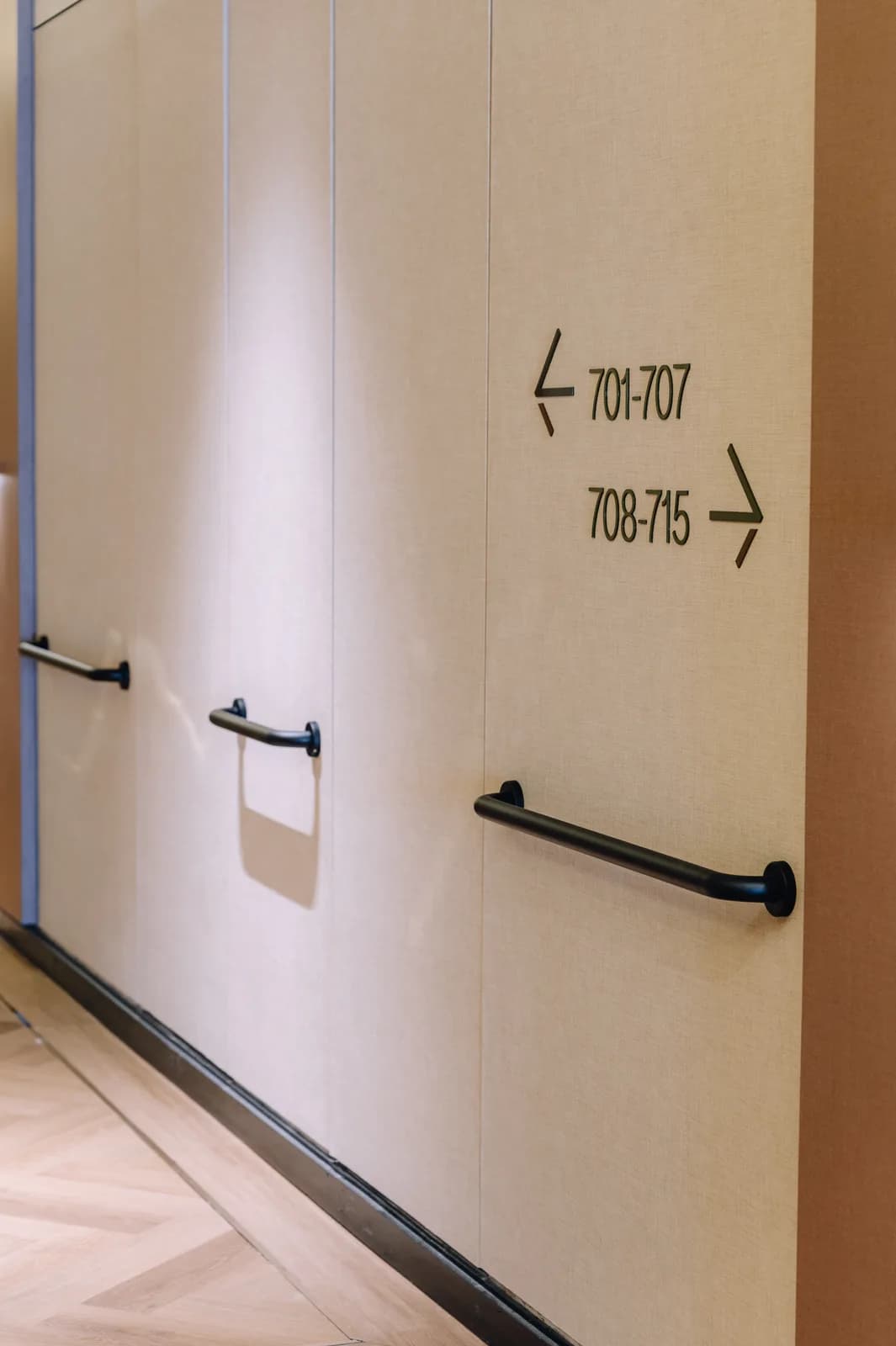
Common questions
How often should a bedridden person be turned?
As often as their nurse or doctor advises. For adults at high risk of sores, NICE says at least every 4 hours. For adults at risk, NICE says at least every 6 hours. Some NHS hospital leaflets ask for every 2 hours.
What are the first signs of a bedsore?
A patch of skin that stays red when you press it, or purple or blue on brown or black skin. It may feel warm, spongy or hard, and hurt or itch. Check the heels, elbows, hips and tailbone every day.
Is there financial help for caring for a bedridden parent in Malaysia?
Yes. JKM pays RM500 a month to the carer of a bedridden person, for Malaysian households earning RM5,000 a month or less. LHDN also gives tax relief: up to RM6,000 for basic supporting equipment for a disabled parent, and up to RM8,000 for a parent's medical and carer costs.
Can the Ministry of Health care for a bedridden patient at home?
Yes. Its domiciliary care service looks after stable bedridden patients at home after they leave hospital. Your parent needs a referral from the hospital or a health clinic, so ask before discharge.
When should a bedridden parent move into a care home?
When their care needs more hands, more nights or more nursing than the family can give. Talk it through with your parent's doctor and, where you can, with your parent.
Come and talk it through
Tours run daily from 10am to 4pm. You can see an Assisted Living suite and talk through your parent's needs with a Care Advisor.
If you would rather ask first, message us on WhatsApp. You can also read about Assisted Living and short stays.
Book a tourSources
The sources behind this page, with the date we checked them
Checked on 24 October 2026.
- NHS, Pressure ulcers (bedsores), reviewed 6 July 2023 (signs, where they form, who is at risk, prevention, urgent signs)
- NICE, Pressure ulcers quality standard QS89, statement 5 (how often to reposition)
- Sandwell and West Birmingham NHS Trust, Preventing pressure ulcers (every 2 hours)
- NHS, Swallowing problems: treatment, reviewed 2 May 2023 (signs, speech therapy, food and drink changes)
- Kent Community Health NHS Foundation Trust, Position and comfort when enteral feeding (30 degrees, 30 minutes)
- MyGOV, Healthcare services for bedridden OKU patients by MOH, updated 13 March 2026 (domiciliary care on referral)
- MyGOV, Assistance for bedridden OKU and chronically ill patients (BPT), updated 13 March 2026 (RM500 a month, household income limit)
- MyGOV, Bantuan Alat Sokongan / Alat Tiruan (BAT), updated 13 March 2026 (wheelchairs for people with disabilities on a low income)
- LHDN, Tax reliefs, year of assessment 2025 (basic supporting equipment, parents' medical and carer costs)
- Care Collective care team, 23 October 2026 (care in Assisted Living by day and night, call bells, hospital trips, stays after hospital, physiotherapy) and Book a Tour (tour hours)