
What is respite care?
Respite care is a break for a family carer: someone else looks after your parent for a few hours, a day or a few weeks.
Malaysia's dementia guideline calls it “any intervention designed to give rest or relief to caregivers”, and says respite care should be offered to help carers cope. It applies to every family carer, whatever the parent's condition.
The usual kinds, as the NHS lists them
What are the signs a family carer needs a break?
A family carer needs a break when tiredness, poor sleep or low mood start to show in daily life.
Signs of carer stress
If you notice these signs, tell your own doctor as well. If caring at home has become too much, our guide to home care or moving in compares the next steps.
What kinds of respite care are there in Kuching?
Respite care in Kuching comes in three kinds: a paid carer at home, day care, and a short stay in a residence. Pick the length of break you need to see which fits.
- A few hours: A paid carer at home
- What happens
- A carer comes to the house and stays with your parent while you go out or rest.
- Fits when
- Your parent is settled at home and you need a few hours back each week.
- Ask about
- The hourly rate, the minimum booking, and who covers if the carer is ill.
- Regular days: Day care
- What happens
- Your parent spends the day at a centre with company, activities and care, and comes home to sleep.
- Fits when
- You work, or need the same days free every week, and nights at home are safe.
- Ask about
- Which days it opens, what the fee includes, and whether your parent can try a day first.
- Nights or a few days: A short stay in a residence
- What happens
- Your parent stays in a residence with care day and night, for a few days or a few weeks.
- Fits when
- You need to travel, recover from an illness of your own, or sleep through the night.
- Ask about
- How far ahead to book, the shortest stay they take, and what the daily or weekly rate includes.
Source: NHS, carer breaks and respite care, May 2026; WHO, respite care for dementia carers, 2012
If a short stay fits, book a tour of Care Collective and see a suite before you choose dates.
What you will find in KuchingOur day care guide explains how a day at a centre works.

What does respite care cost in Malaysia?
Respite care at home costs about RM20 to RM45 an hour on published Malaysian rates. Day care and residential stays are charged by the day, the week or the month.
- A paid carer at homeAbout RM20 to RM45 an hour
Six hours comes to about RM120 to RM270. Published rates are for the Klang Valley, Johor, Penang and Perak.
- Day care in KuchingFrom RM1,400 a month at one centre
Few Kuching centres publish a fee. Ask whether a daily rate is possible.
- A residential stayAbout RM1,500 to RM9,000 a month
Short stays are usually charged by the day or the week. Ask for the rate in writing.
Source: The Vibes, September 2026 (hourly home care); Living Hope Home, Kuching (day care); Senior Living Malaysia and Nursing Home Guide, 2026 (residential care)
No Kuching care home we found publishes a respite rate. Ask each one for a written quote that lists what the stay includes and what costs extra.
Help with the costHow to choose a care home covers what a quote should include and who else helps pay.
How do you plan a respite stay?
Plan a respite stay ahead of time: book early, try a stay before you urgently need one, and share your parent's papers and routines.
- 1Book ahead
Places can be hard to find at short notice, so ask early, before the dates you need.
- 2Try it early
Try a provider before an emergency, so you are ready if you suddenly need a break.
- 3Share the papers
A current medication list, the doctor's letters and your parent's daily routine.
- 4Pack familiar things
Photos, a pillow or a favourite blanket help a new room feel like your parent's own.
Source: NHS, May 2026; Alzheimer's Society; Alzheimer's Association
Papers, routines and packing
Tick each one as you get it ready. Your ticks stay on this device.
0 of 10 ready
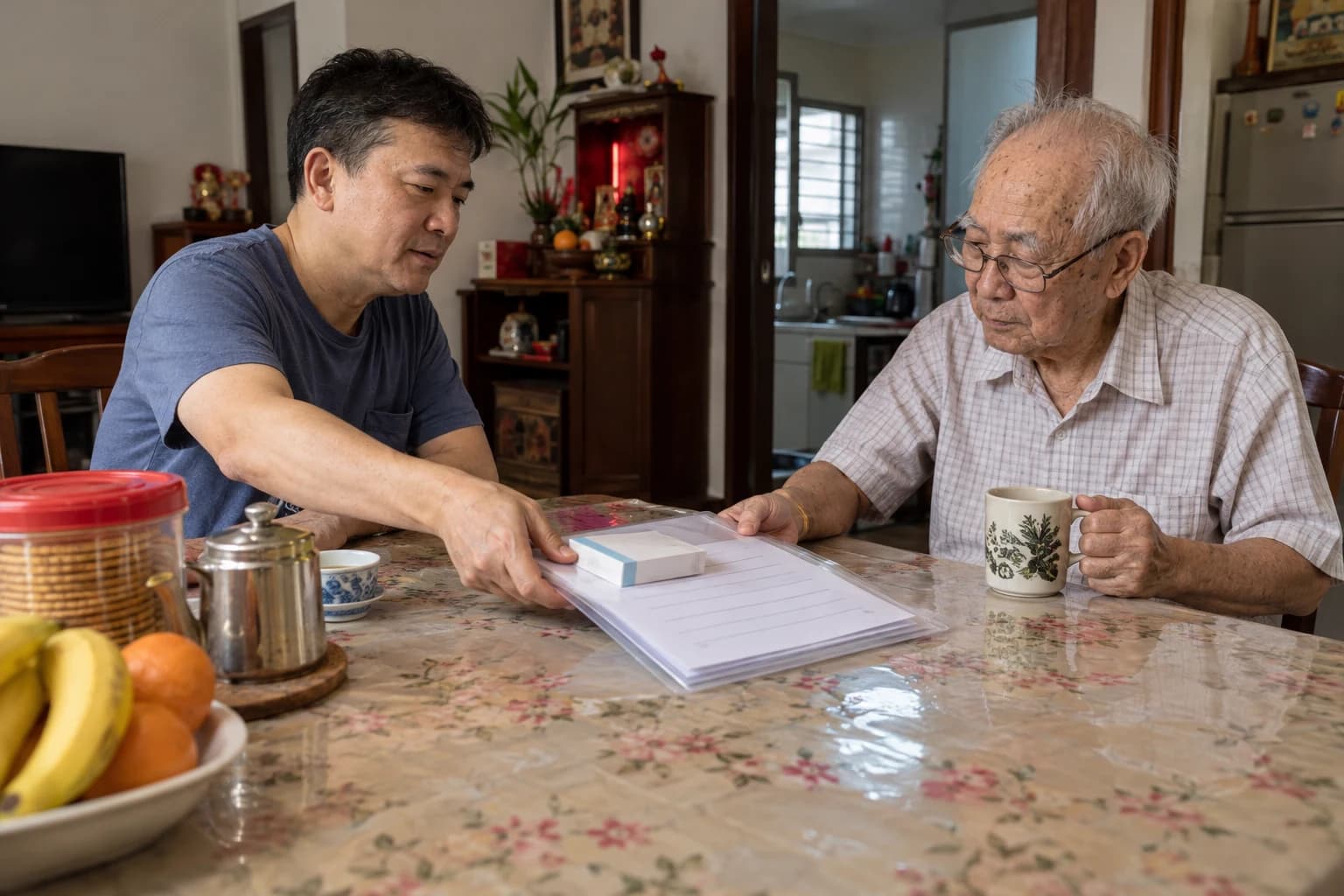
When your parent comes home, ask the team how the stay went, and note what to change next time.

From here on: short stays at Care Collective, Wisma Elica, Kuching.
How does a respite stay at Care Collective work?
At Care Collective, a respite stay is a short stay: your parent moves into a suite with daily care from our team.

Read how a stay works on our short stays page. Our offer: RM2,000 off the first month of a new Assisted Living stay of a month or longer, dementia care included, until 31 December 2026. A short stay qualifies only when it lasts a month or longer.
For regular days insteadThe Clubhouse is our day membership: members spend the day with us and go home in the evening. It takes members with early and moderate memory loss, and offers a free 3-day trial until 31 December 2026.

Common questions
What is respite care?
Respite care is a break for a family carer while someone else looks after the person they care for. It can last a few hours, a day, or a stay of a few days or weeks.
How much does respite care cost in Malaysia?
It depends on the kind: a paid carer at home costs about RM20 to RM45 an hour on published rates.
- One Kuching day care centre publishes a fee from RM1,400 a month.
- Residential stays are usually charged by the day or the week, so ask for a written quote.
How long can a respite stay last?
Anything from a few hours to several weeks, depending on the kind of respite. A residential respite stay usually lasts a few days or a few weeks.
Can a parent with dementia have respite care?
Yes. Malaysia's dementia guideline says respite care should be offered to help carers cope. Choose a provider that takes people living with dementia, and share your parent's routines before the stay.
When should a family carer take a break?
Before exhaustion sets in, and then at regular times.
- Breaks help stop a carer becoming exhausted and run down, the NHS says.
- Plan the first one early: places can be hard to find at short notice.
Come and talk it through
If you need a break soon, come and see Care Collective: tours run daily from 10am to 4pm. You can see a suite and talk through the dates and the care your parent needs with a Care Advisor.
If you would rather ask first, message us on WhatsApp. You can also read about short stays and the Clubhouse.
Book a tourSources
The sources behind this page, with the date we checked them
Checked on 24 October 2026.
- NHS, Carer breaks and respite care, reviewed 1 May 2026 (definition, kinds, booking ahead)
- World Health Organization, mhGAP evidence profile on respite care, 2012 (settings and length)
- Ministry of Health Malaysia, Clinical Practice Guidelines: Management of Dementia, third edition, 2021 (definition of respite, respite to be offered)
- Alzheimer's Association, Caregiver stress (signs)
- The Star, 28 September 2026, quoting Prof Dr Tan Maw Pin, Universiti Malaya (signs of carer burnout)
- Nasreen and others, BMC Geriatrics, 5 August 2024 (carer strain and depression among 121 Malaysian dementia carers)
- Borneo Post, 12 May 2026 (day care centres in Sarawak and Kuching)
- MyGOV, Pusat Aktiviti Warga Emas (PAWE), updated 13 March 2026 (who PAWE is for)
- The Vibes, opinion, September 2026, citing 27 Advisory (hourly home care rates)
- Living Hope Home, Kuching (published day care fee)
- Senior Living Malaysia, Cost of eldercare in Malaysia, 2026, and Nursing Home Guide, 2026 (residential care ranges)
- Malay Mail, 10 October 2026 (the RM8,000 relief and the Budget 2027 proposal)
- Bernama, 9 October 2026 (the proposed service tax cut on care for seniors)
- Ministry of Finance, Budget 2027 tax measures, Appendices 3 and 34 (the current relief conditions, both proposals, the registered-centre and per-person conditions)
- Alzheimer's Society, Adapting to replacement care (familiar things)
- Alzheimer's Association, Respite care (plan before an emergency, the medication list)
- Care Collective care team, 23 October 2026 (short stay care, dementia care, staying on in the same suite), and Book a Tour (tour hours, the year-end offers)